project details
Year
2026
Tools
Figma, Figjam.
The Problem
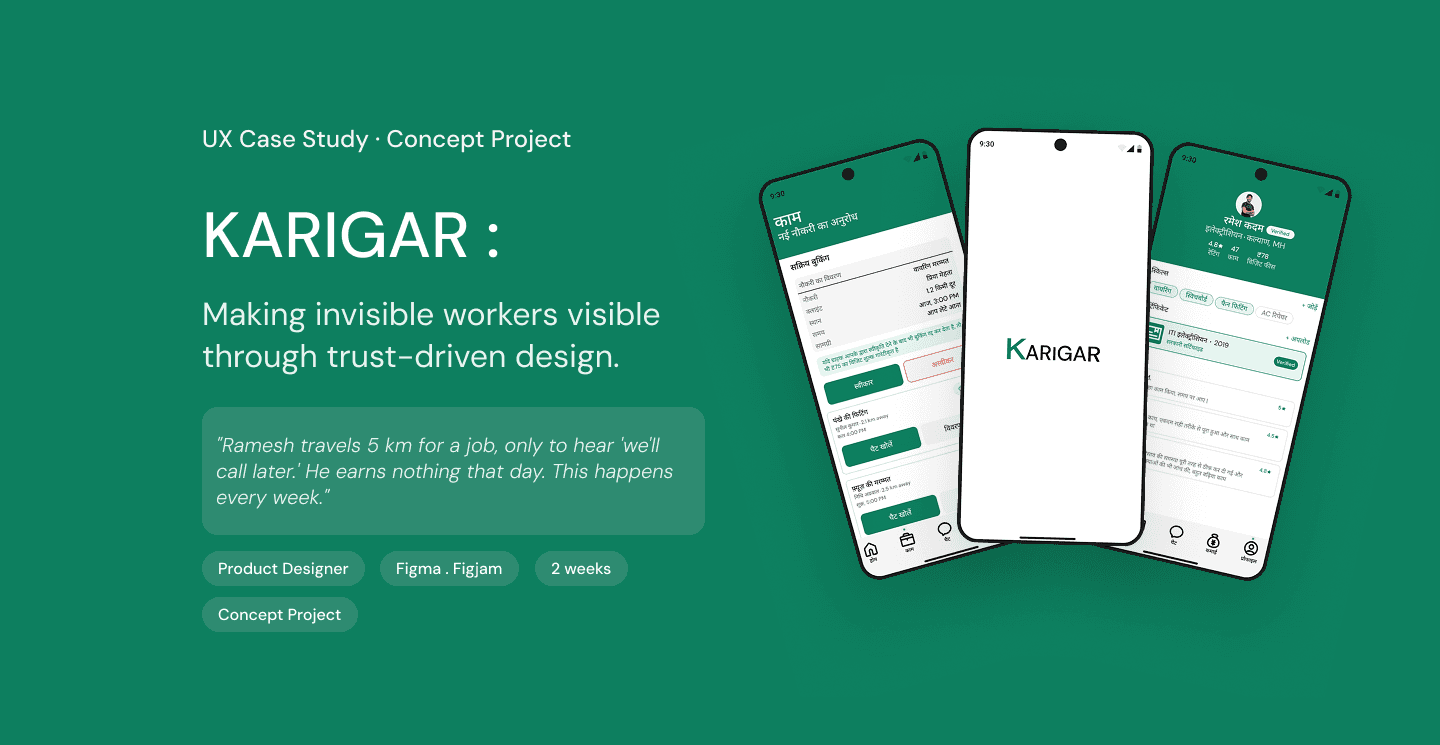
India has over 600 million informal workers—electricians, plumbers, carpenters, and house helpers. Skilled, experienced, and essential. But to the system, it's largely invisible.
80–90% of these workers have no verified identity, no work record, and no formal way to prove their skill. Jobs come through word of mouth. Wages are delayed with no record to dispute. Platforms like Urban Company exist, but their high entry barriers leave independent local workers excluded entirely.
The informal labor market isn't broken because workers lack skill. It's broken because they lack infrastructure. Karigar was designed to give them one.
Research
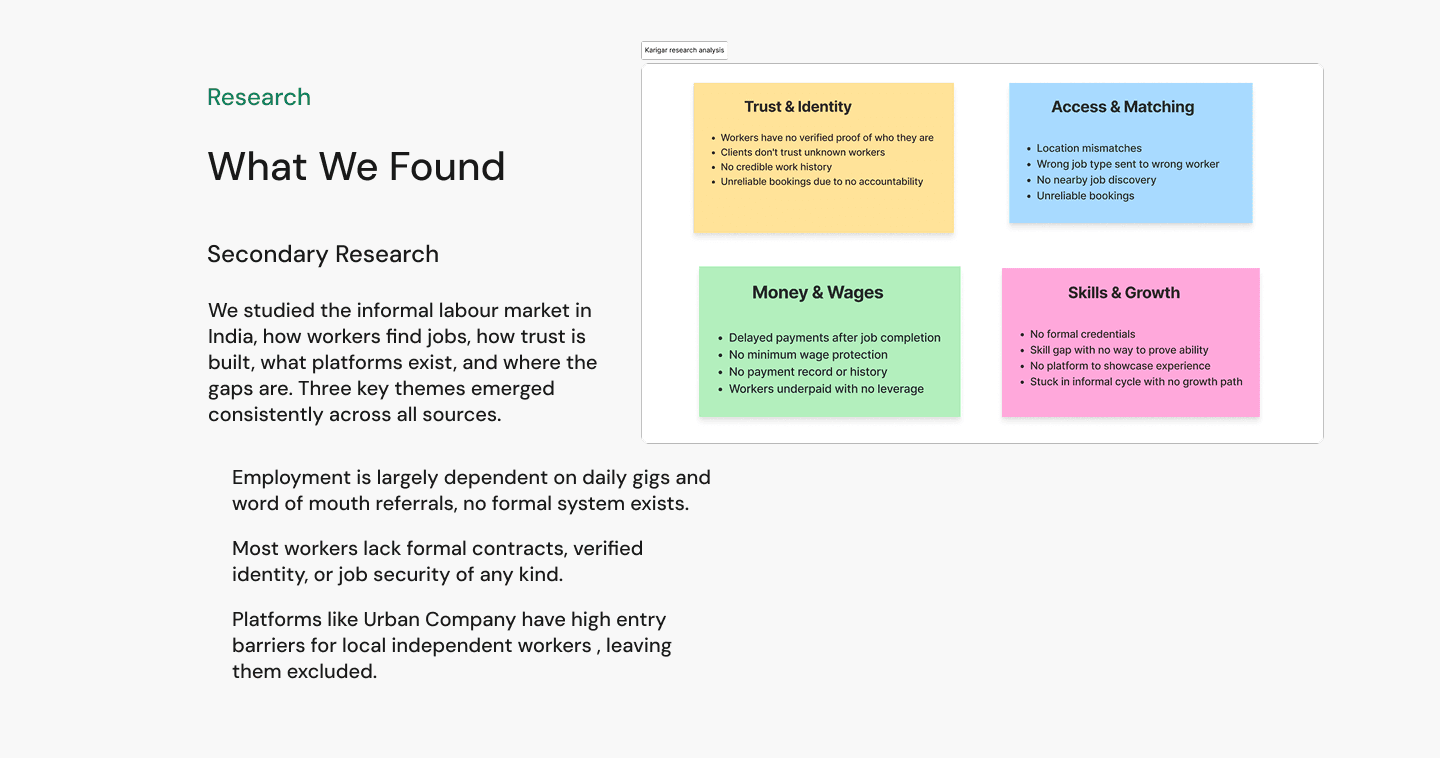
Competitive analysis of Urban Company revealed a critical gap — existing platforms optimise for the employer, not the worker. High onboarding barriers, platform dependency, and no worker-owned profile. Karigar was designed to flip that. Every design decision maps back to one of these four gaps.
USer flows
Worker's Side Flow
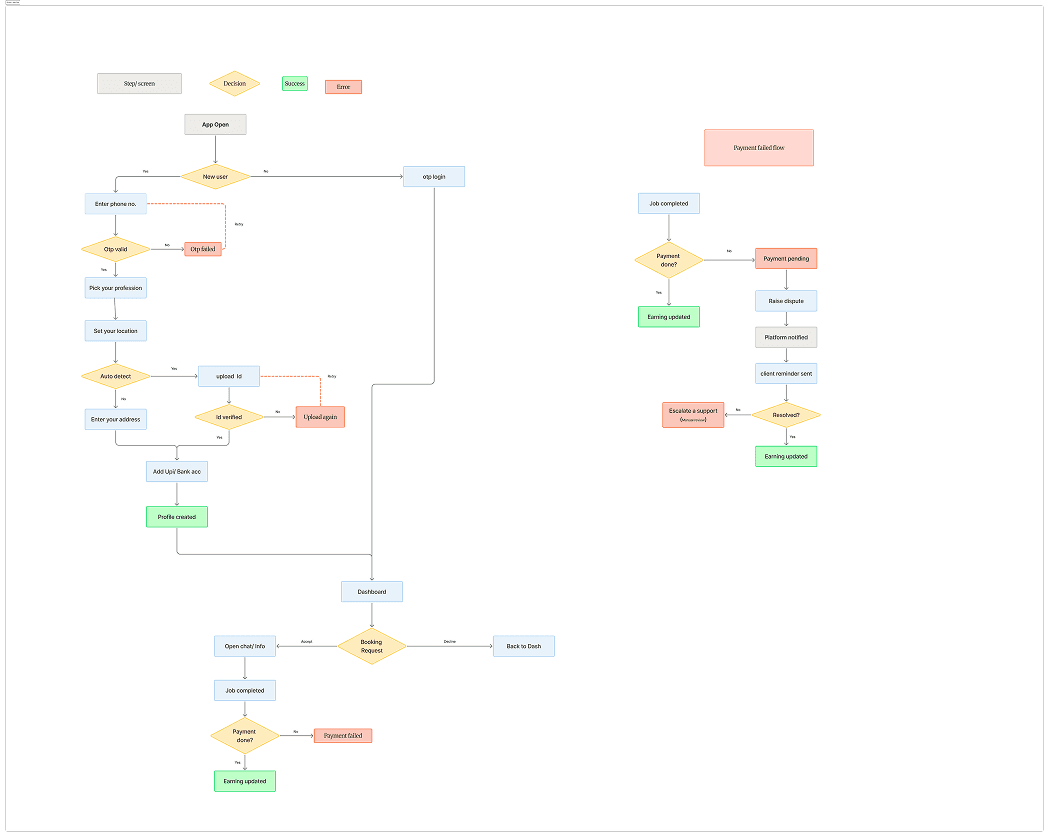
Worker's Side Flow
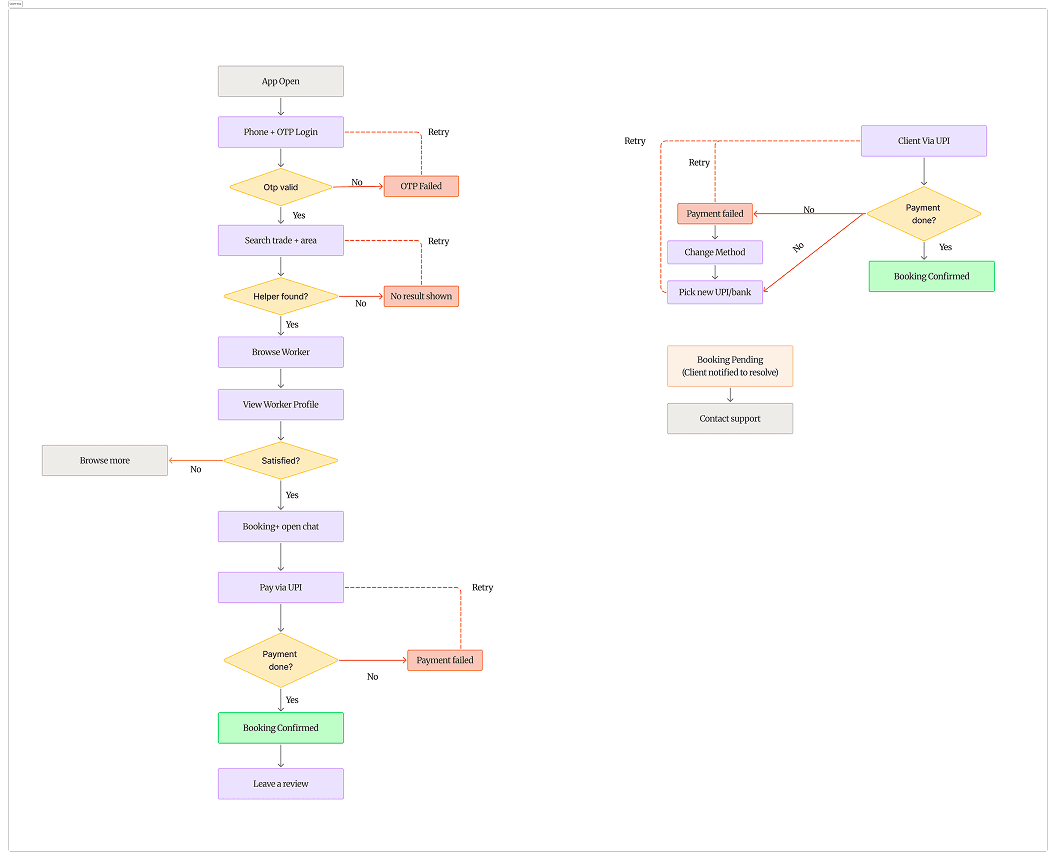
The Design Challenge
How do you build a trusted professional identity for someone who has never had one-without making it feel like another system that wasn't built for them?
Constraints were real: low digital literacy, inconsistent internet, distrust of formal platforms, and no prior habit of managing a professional profile. The design had to work in under 2 minutes, feel trustworthy enough to replace a referral, and give both sides a reason to come back.
Key Design Decisions
Verification first, everything else second
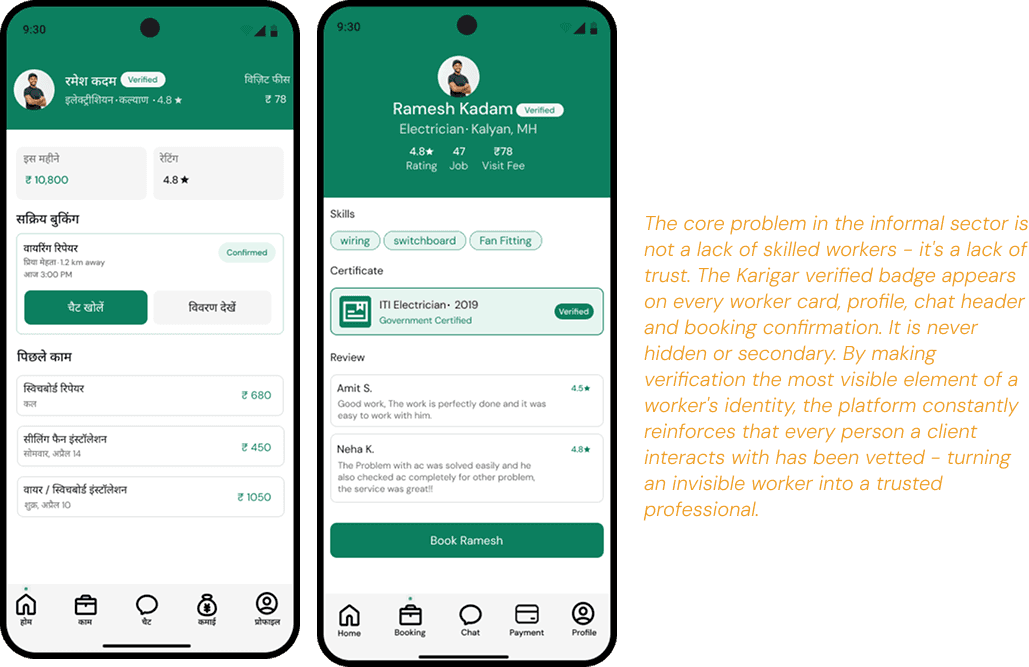
Trust is the product. Verification isn't buried in settings, it's step one of onboarding, because without it nothing else in the system holds.
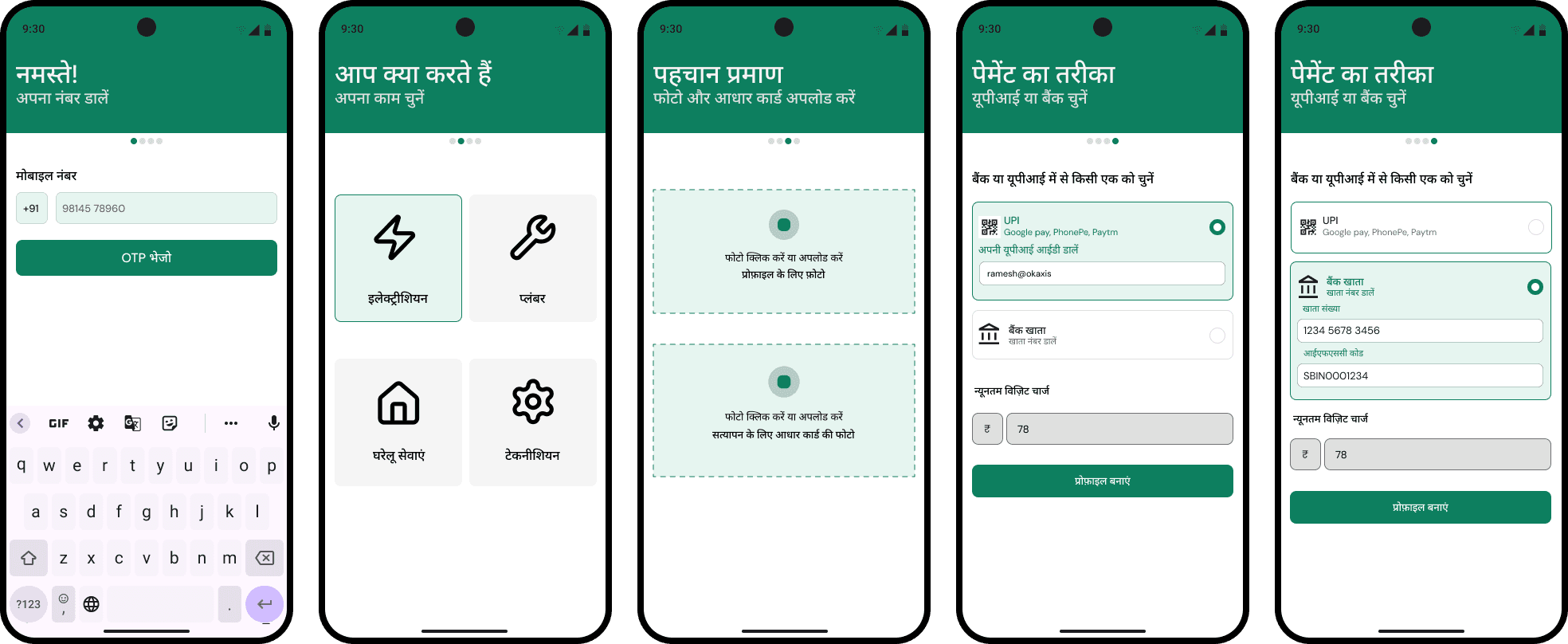
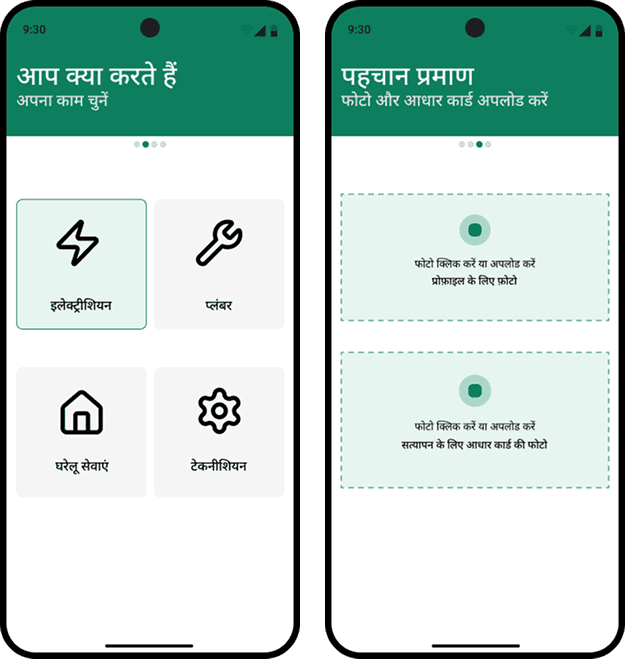
Worker onboarding in 5 screens
Reduced to only what's essential — trade, location, one proof of identity. Every removed step was a potential drop-off prevented for a first-time user with low digital confidence.
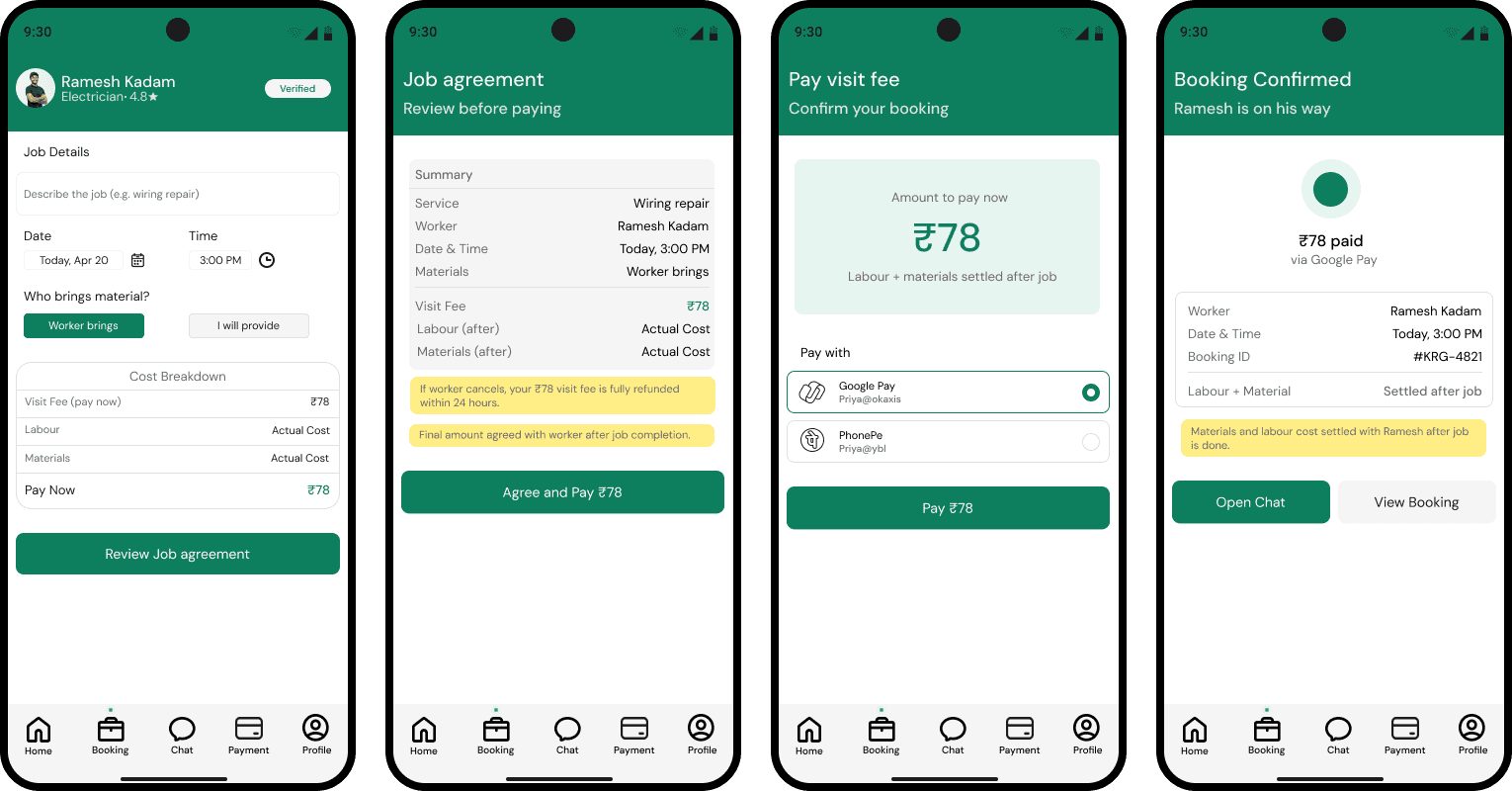
Job booking collapsed to 4 screens
From discovery to agreement to payment - all in one linear flow. No dead ends, no confusion about what happens next.
Voice input for billing and chat Screen
After completing a job, a worker needs to enter their labour charge and material cost to generate a bill. Asking a low literacy user to type numbers and amounts on a small Android keyboard is a real barrier. Karigar adds a voice input button on every billing field, the worker holds and speaks the amount, and the app records it. This removes the typing barrier entirely and makes the billing step feel as natural as a conversation.
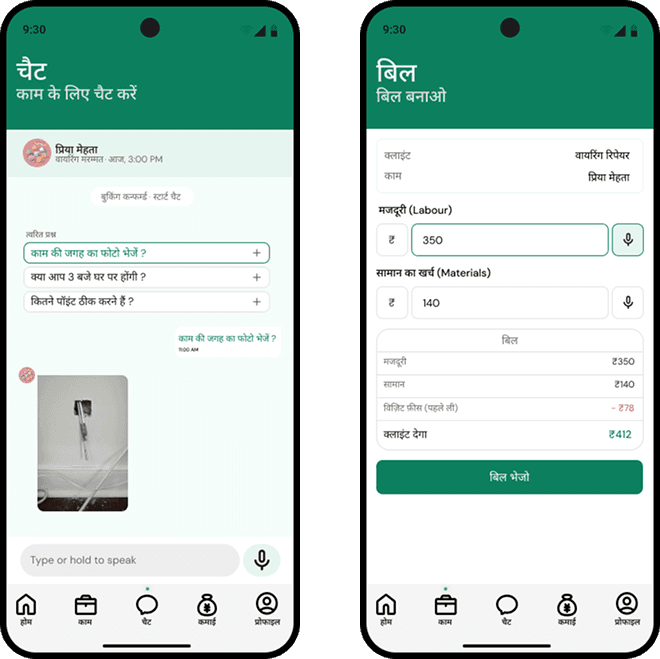
Native language for workers Screen
Most service apps in India are designed in English - which immediately excludes a large portion of informal workers who are more comfortable in Hindi. For Karigar's worker side, every screen, label, button and error message is written in Hindi. This single decision reduces cognitive load, builds familiarity and signals to Ramesh that this platform was built for him- not for his English speaking client.
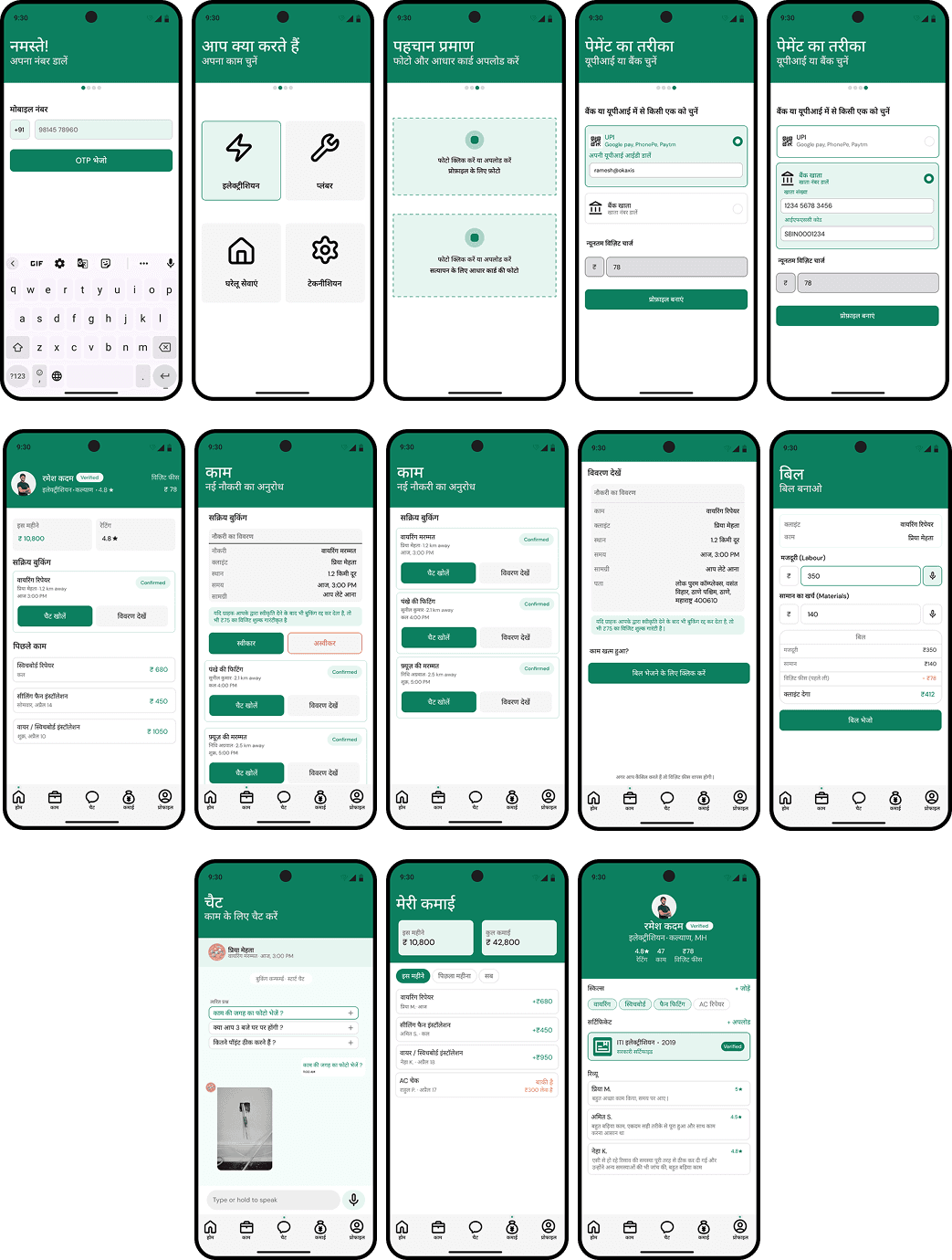
Final Screens
Worker's Side
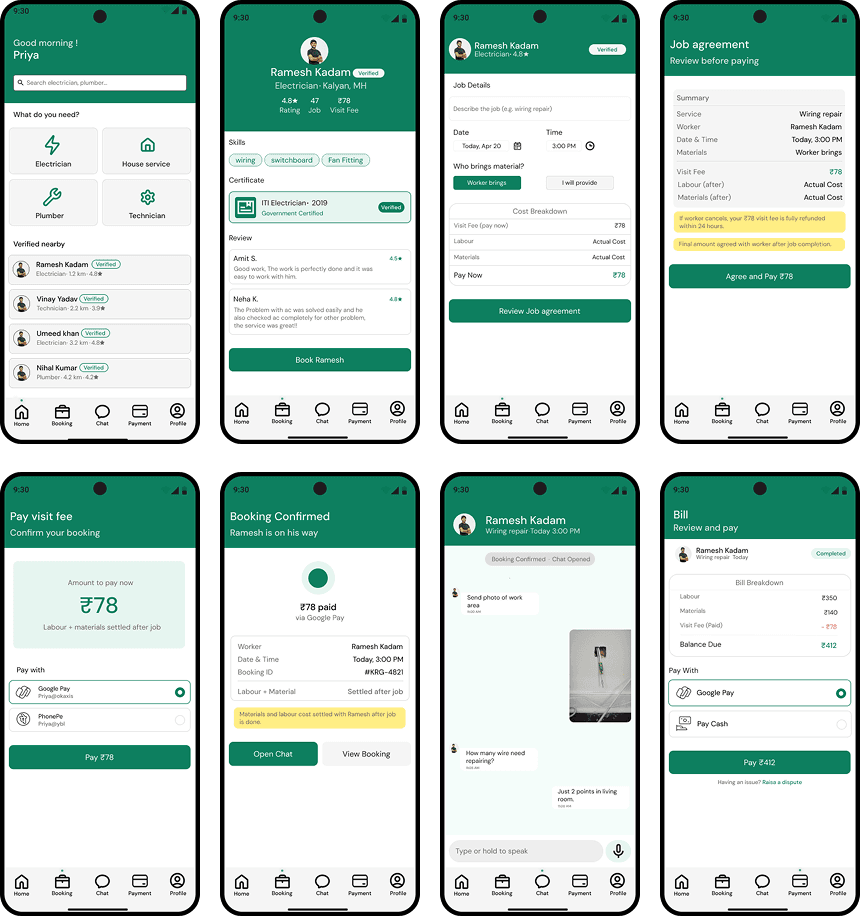
Client's Side